
Technology & Process
- Home
- Technology & Process
How Biofuel is Made
The process begins with the collection of agricultural residues such as rice husk, wheat straw, corn stalks, and other biomass waste from farms and processing units.
Collected biomass is dried to reduce moisture content. Proper drying ensures efficient processing and improves the quality and combustion efficiency of the final biofuel product.
The dried biomass is then shredded or chopped into smaller particles. This step helps prepare the material for compression and improves the efficiency of the briquetting or pelletizing process.
The processed biomass is compressed using specialized machines to form biofuel briquettes or pellets. These compact fuels have higher energy density and are easier to store and transport.
The finished biofuel products are stored in controlled conditions and distributed to industries, power plants, and other energy users for clean and sustainable energy production.
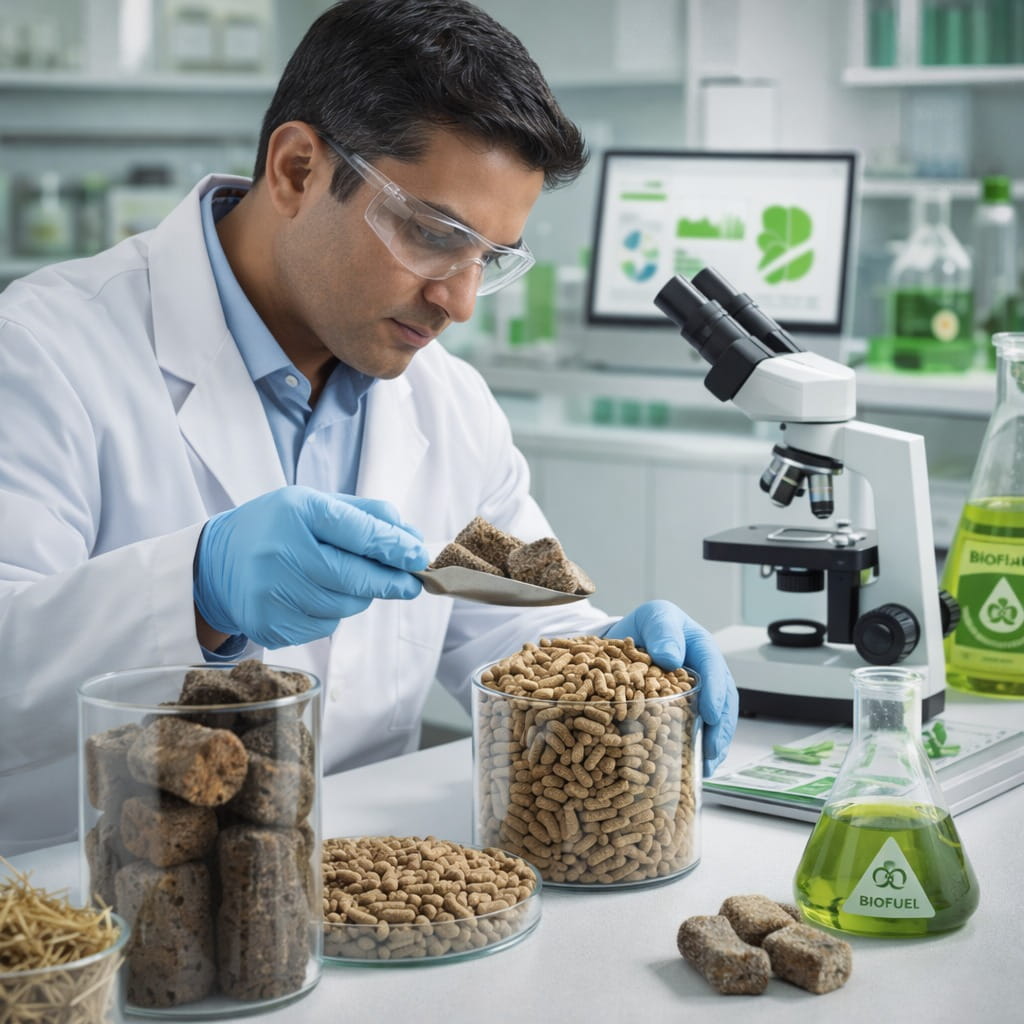
Biofuel Quality
Quality Control & Testing
Testing Parameters
Quality is tested for moisture, calorific value, ash content, and density to ensure high performance.
Lab & Third-Party Testing
Products are verified through in-house labs and independent testing to maintain industry standards.
Clean energy
Sustainability & Innovation
🌱
Coal vs Biofuel
Biofuel produces lower emissions than coal, helping reduce pollution and support cleaner energy.
⚡
Future R&D Plans
Research focuses on bio-CNG and advanced biomass pellets for more efficient renewable energy.