
Food Processing & Bakeries
- Home
- Food Processing & Bakeries
Food Processing & Bakeries
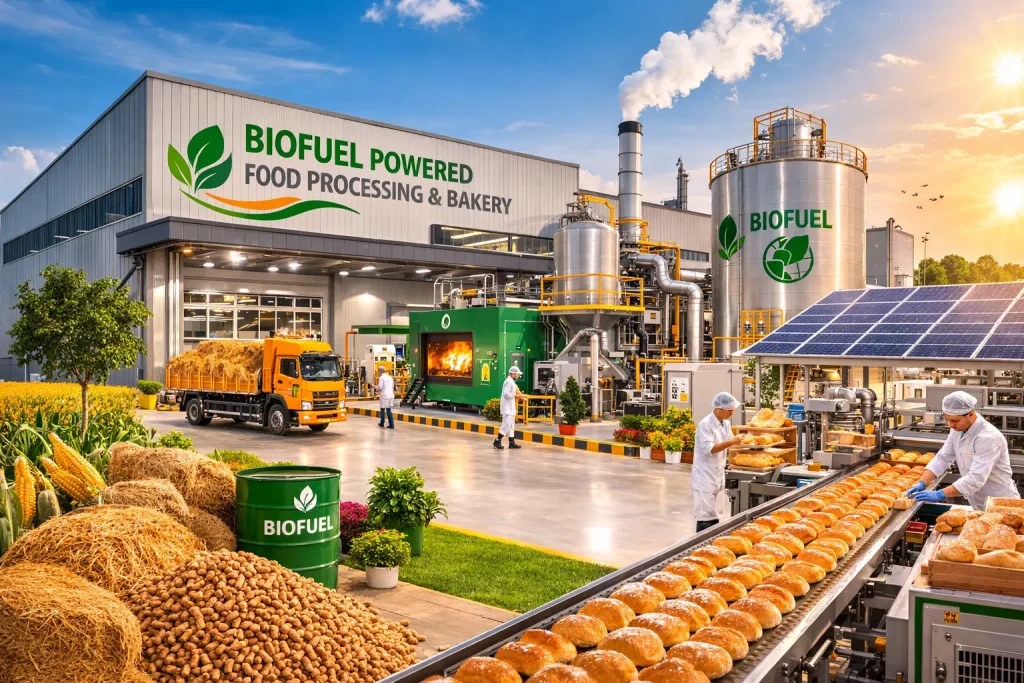
Food processing industries and bakeries rely heavily on heat and energy to perform essential operations such as baking, drying, boiling, sterilizing, and packaging. These processes traditionally depend on fossil fuels such as coal, furnace oil, or diesel. However, these fuels not only increase operational costs but also contribute to environmental pollution. Biofuel is increasingly becoming a reliable alternative energy source for food industries seeking sustainable and cost-effective operations.
Biofuel is produced from renewable biological materials including crop residues, agricultural waste, and organic byproducts. These resources are converted into usable fuels such as biogas, biodiesel, or biomass pellets. Food processing plants can use these fuels in boilers, ovens, and heating systems to generate the thermal energy required for production processes.
One of the primary benefits of biofuel for food industries is cost reduction. Fuel expenses account for a significant portion of operating costs in bakeries and food processing plants. By switching to biofuel, companies can reduce fuel expenditures while maintaining consistent energy supply. Locally sourced biomass fuels are often cheaper and more stable in price compared to fossil fuels.
Environmental sustainability is another major advantage. Food processing companies are under increasing pressure to adopt environmentally responsible practices. Using biofuel significantly reduces greenhouse gas emissions and air pollution. Because biofuel is derived from organic waste that naturally decomposes, its carbon footprint is considerably lower than traditional fossil fuels.
Biofuel also supports waste management and circular economy practices. Many food processing plants generate organic waste as part of their operations. Instead of disposing of this waste, companies can convert it into bioenergy through anaerobic digestion or biomass conversion technologies. This approach reduces waste disposal costs while generating valuable renewable energy.
Reliability and operational efficiency are also key factors driving biofuel adoption. Modern biomass boilers and bioenergy systems are highly efficient and capable of delivering consistent heat for industrial processes. This reliability ensures that production lines operate smoothly without interruptions.
Additionally, adopting biofuel solutions can improve the public image of food companies. Consumers are increasingly concerned about sustainability and environmental impact. Companies that demonstrate commitment to renewable energy and waste reduction gain stronger trust and brand loyalty among customers.
Government policies and incentives also encourage industries to adopt renewable energy technologies. Many countries offer financial support, subsidies, or tax benefits for businesses investing in clean energy infrastructure. Food processing plants that transition to biofuel systems may benefit from these programs while achieving long-term energy security.
Overall, biofuel provides a sustainable and economically viable energy solution for food processing industries and bakeries. By converting organic waste into renewable energy, businesses can reduce costs, lower emissions, improve efficiency, and contribute to a cleaner environment while maintaining reliable production operations.